 Mixlio
01What it is
Spirit-forward drinks are almost all spirit. There is no juice, just a spirit softened with vermouth, a liqueur, a little sugar or a few dashes of bitters.
They are strong, smooth and meant to be sipped slowly. If you want to taste what makes a whiskey, a gin or a cognac special, this is the family for you.
02A short history
This is where the word cocktail began. In 1806 a New York paper defined a "cock-tail" as spirit, sugar, water and bitters, which is still the recipe for an Old Fashioned.
In the late 1800s bartenders started adding vermouth, newly arrived from Italy and France. That gave the Manhattan, the Martinez and later the Dry Martini. In the 1910s and 1920s Italy added the Negroni, with bitter Campari in equal parts with gin and vermouth.
03Three base recipes
Nearly every drink in this family is one of these three shapes with a different spirit or modifier.
04Why it tastes this way
Stirred, never shaken
With no juice to mix in, a gentle stir chills and dilutes the drink while keeping it clear and silky. Shaking would cloud it and fill it with air.
Water is an ingredient
Stirring adds about a fifth more water. That small amount opens up the aromas and softens the burn of the alcohol.
Bitters are seasoning
A couple of dashes of bitters work like salt and pepper. You barely notice them, but the drink tastes flat without them.
05The family tree
Same family, small changes. Each of these is one swap away from the next.
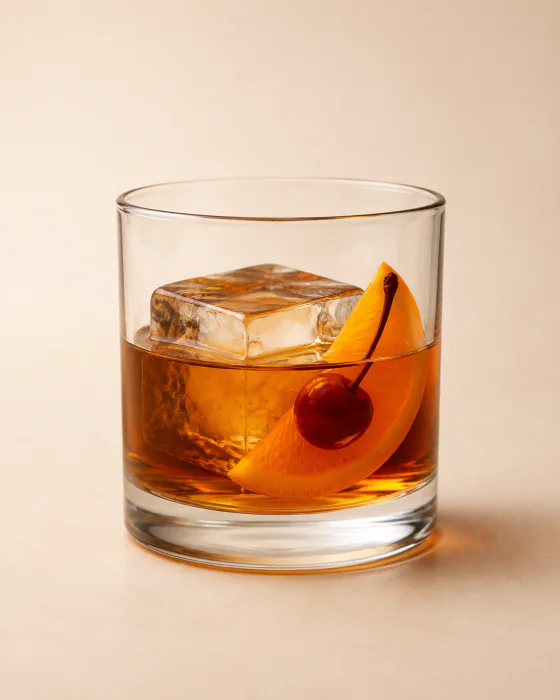 Old FashionedWhiskey, sugar, bitters, water. The first cocktail.
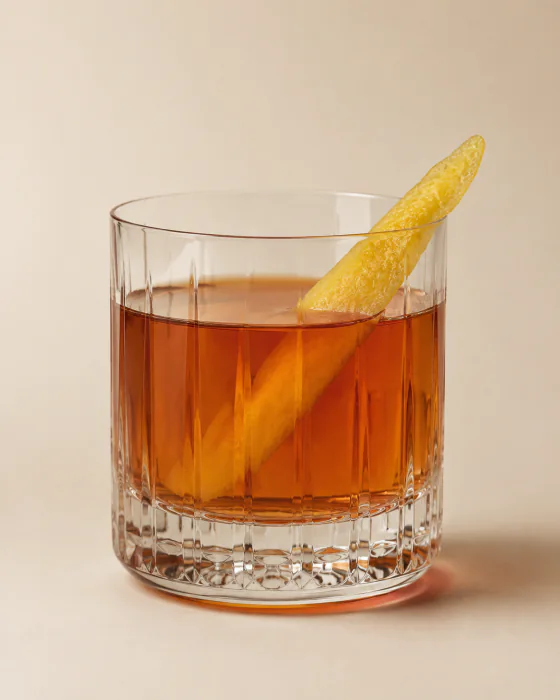 SazeracCognac or rye with Peychaud's bitters and an absinthe rinse.
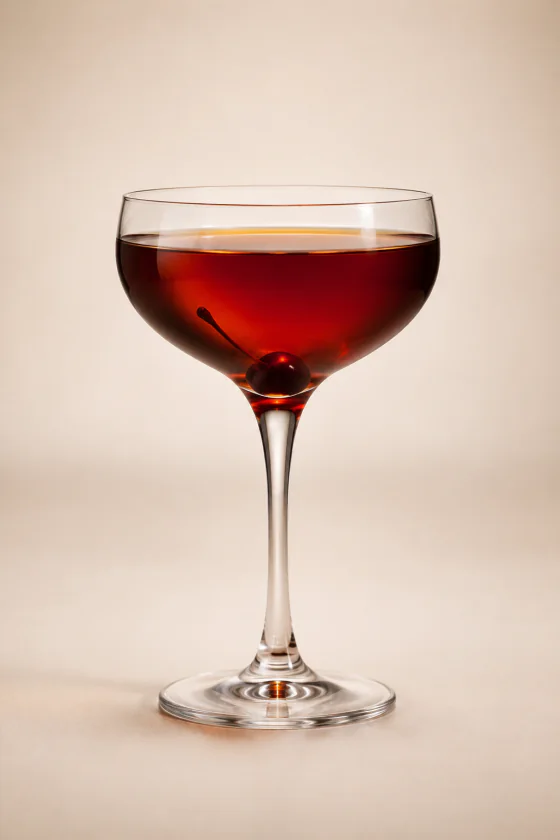 ManhattanWhiskey and sweet vermouth with bitters.
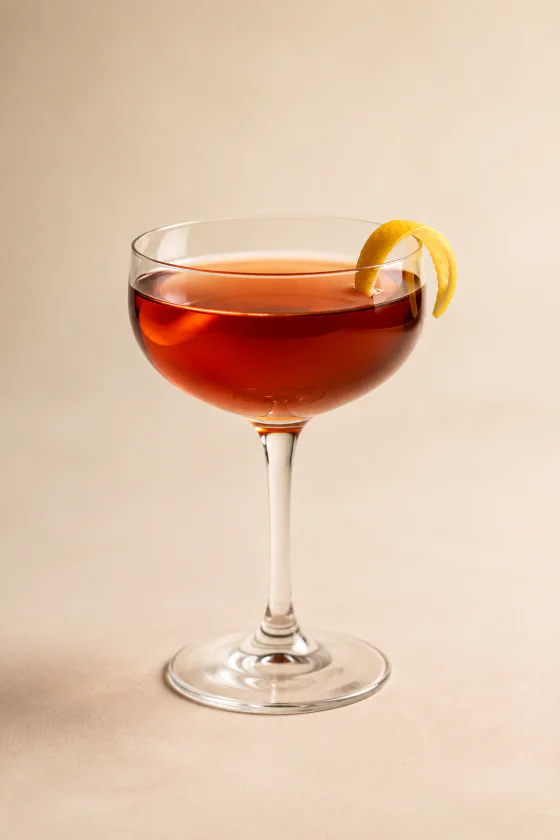 MartinezGin and sweet vermouth with maraschino. The Martini's ancestor.
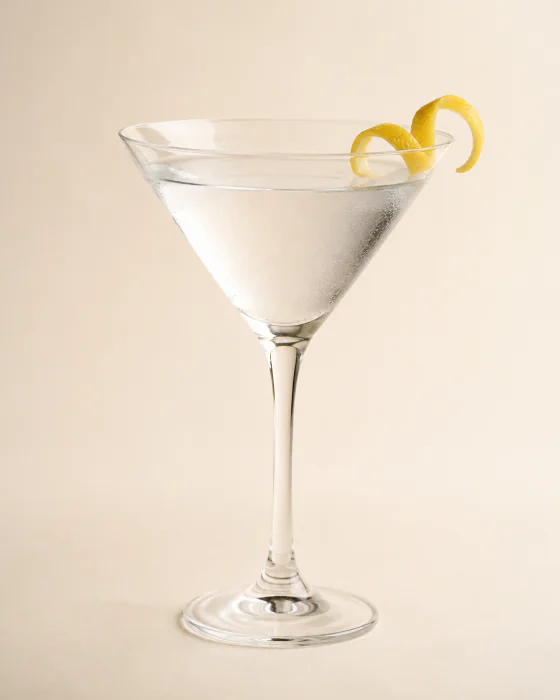 Dry MartiniGin and dry vermouth, very cold.
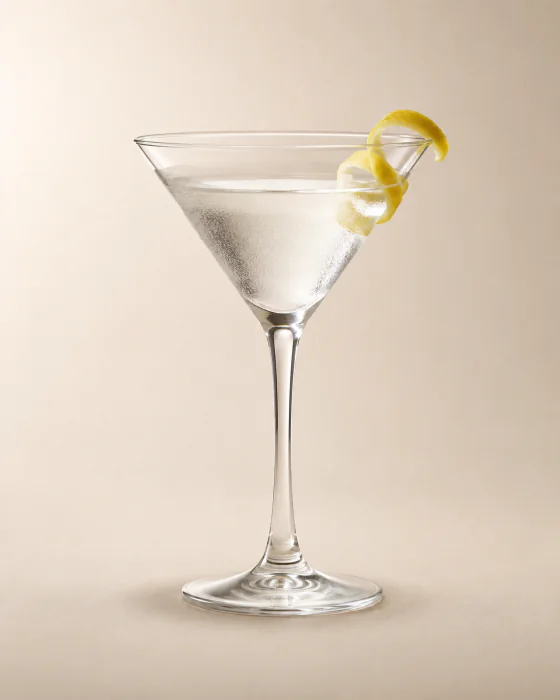 VesperGin, vodka and Lillet Blanc.
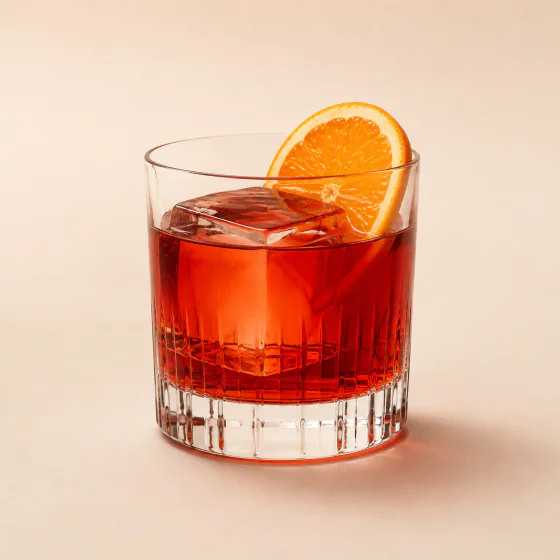 NegroniGin, Campari and sweet vermouth in equal parts.
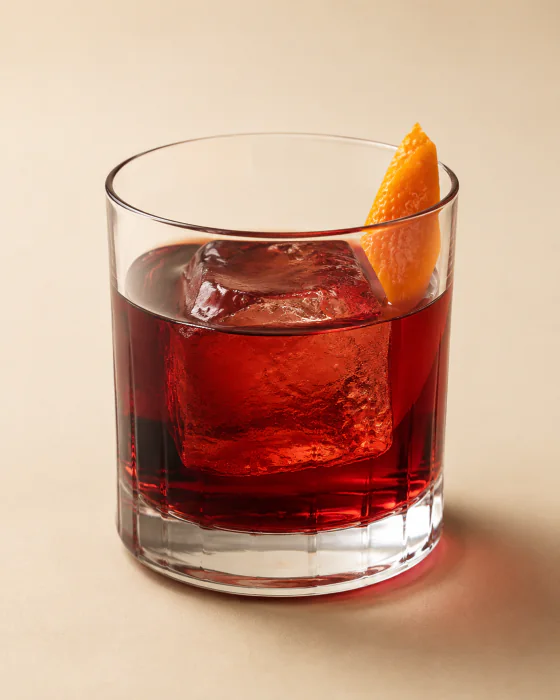 BoulevardierA Negroni made with bourbon.
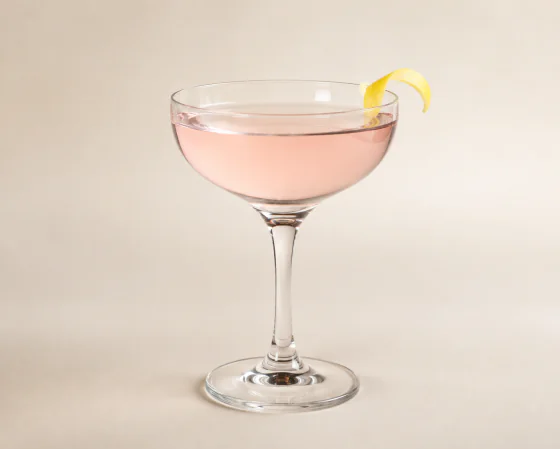 CardinaleA Negroni with dry vermouth instead of sweet.
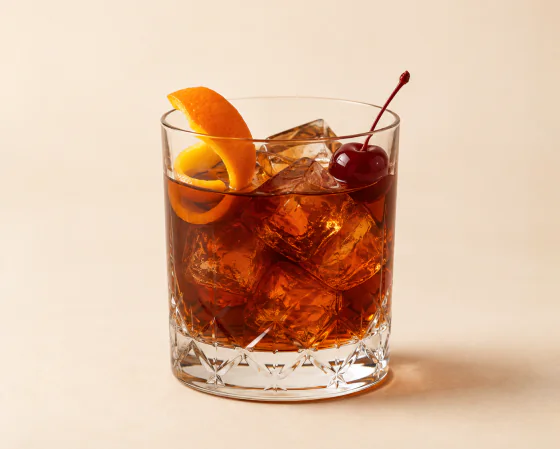 Vieux CarréRye, cognac, vermouth and Bénédictine. Rich and spiced.
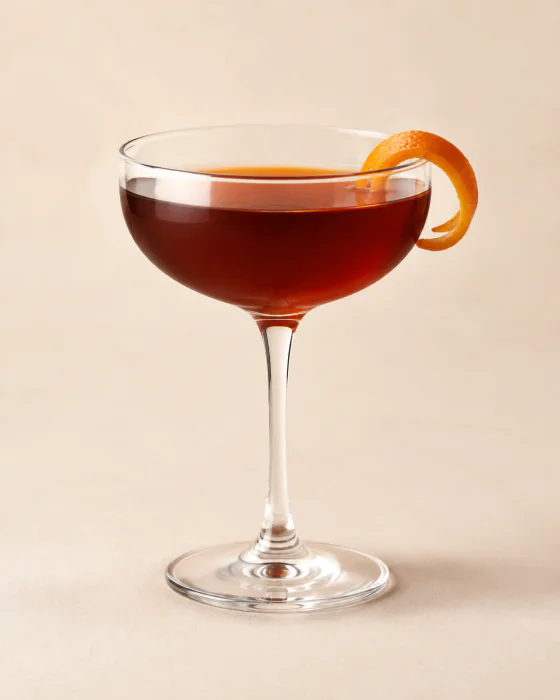 Hanky PankyGin and sweet vermouth with a little Fernet.
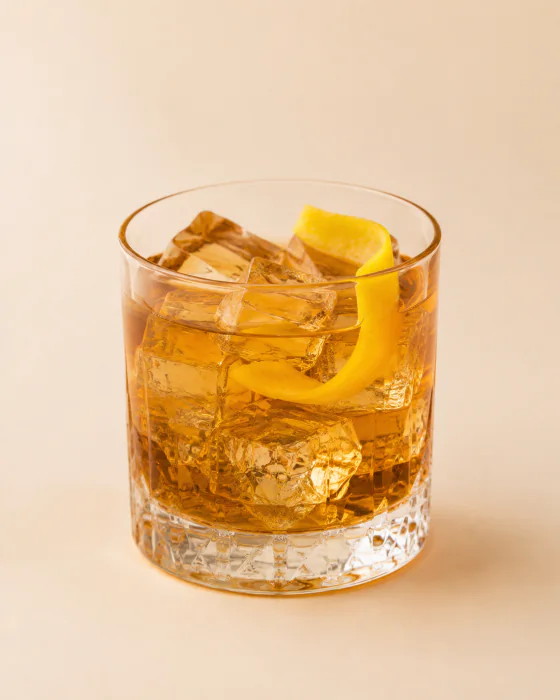 Rusty NailScotch and Drambuie, nothing else.
06Spot it on a menu
Look for these words. Tap one to see what it means.
If a menu lists no juice at all, only spirits, vermouths and bitters, the drink is spirit-forward and will be strong.
07How to order it
- Choose "up" (cold, stemmed glass) or "on the rocks". Many bars serve these over one big ice cube that melts slowly.
- For a Martini, say gin or vodka, then how dry, then a twist of lemon or an olive.
- These are strong, often more than 25% alcohol. One goes a long way.
08Mistakes to avoid
Shaking it
A shaken Manhattan turns cloudy and watery. Stir it.
Old vermouth
Vermouth is wine. Once open, keep it in the fridge and use it within a few weeks.
Warm glass
Chill the glass first. These drinks have no ice in them when served up, so they warm up fast.
09Start with these three
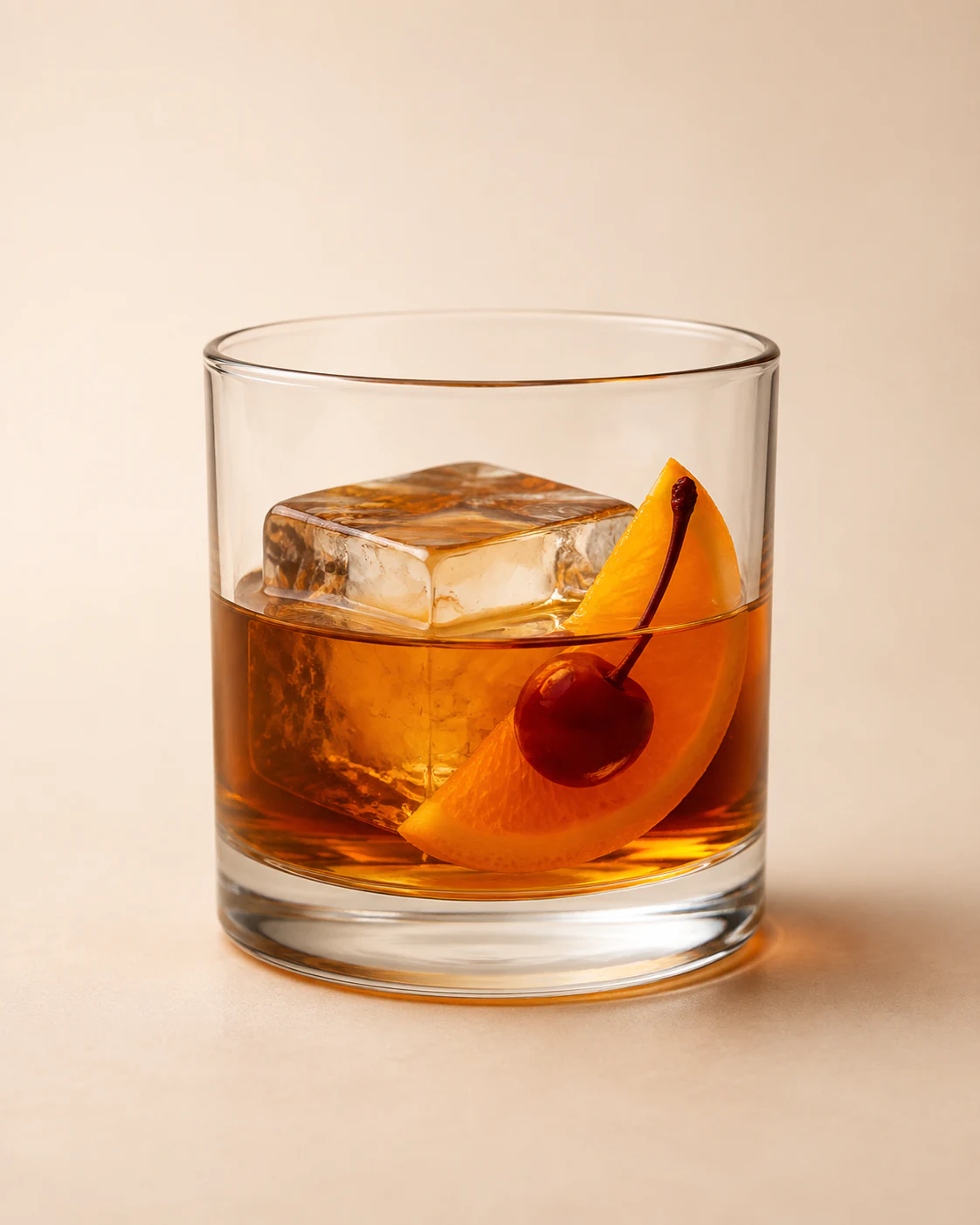 Old FashionedSugar, bitters and a little water, then whiskey and one large cube. The original template every other cocktail gets measured against.
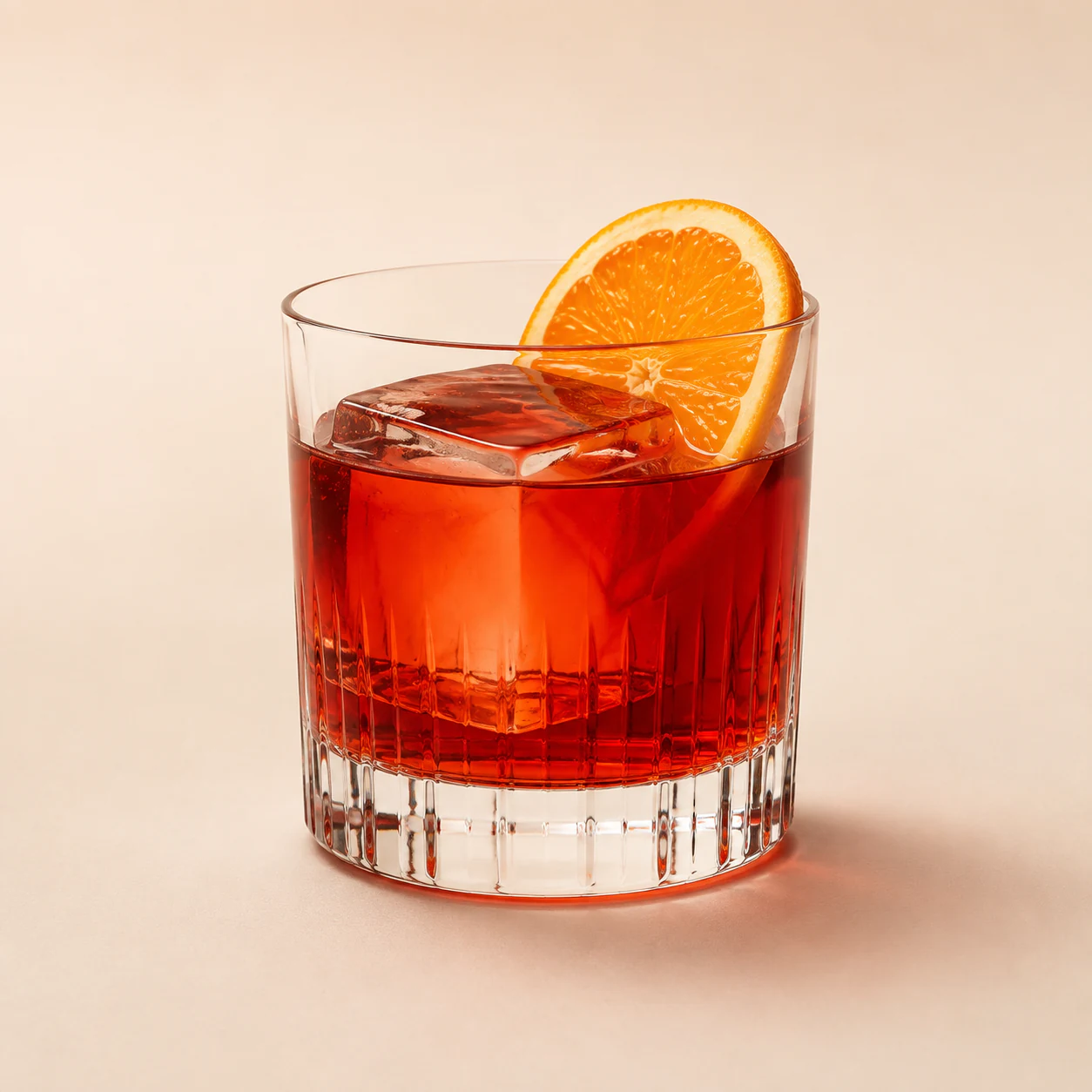 NegroniEqual gin, Campari and sweet vermouth, stirred over a big cube with orange on top. Bitter, red, and the aperitif everyone orders eventually.
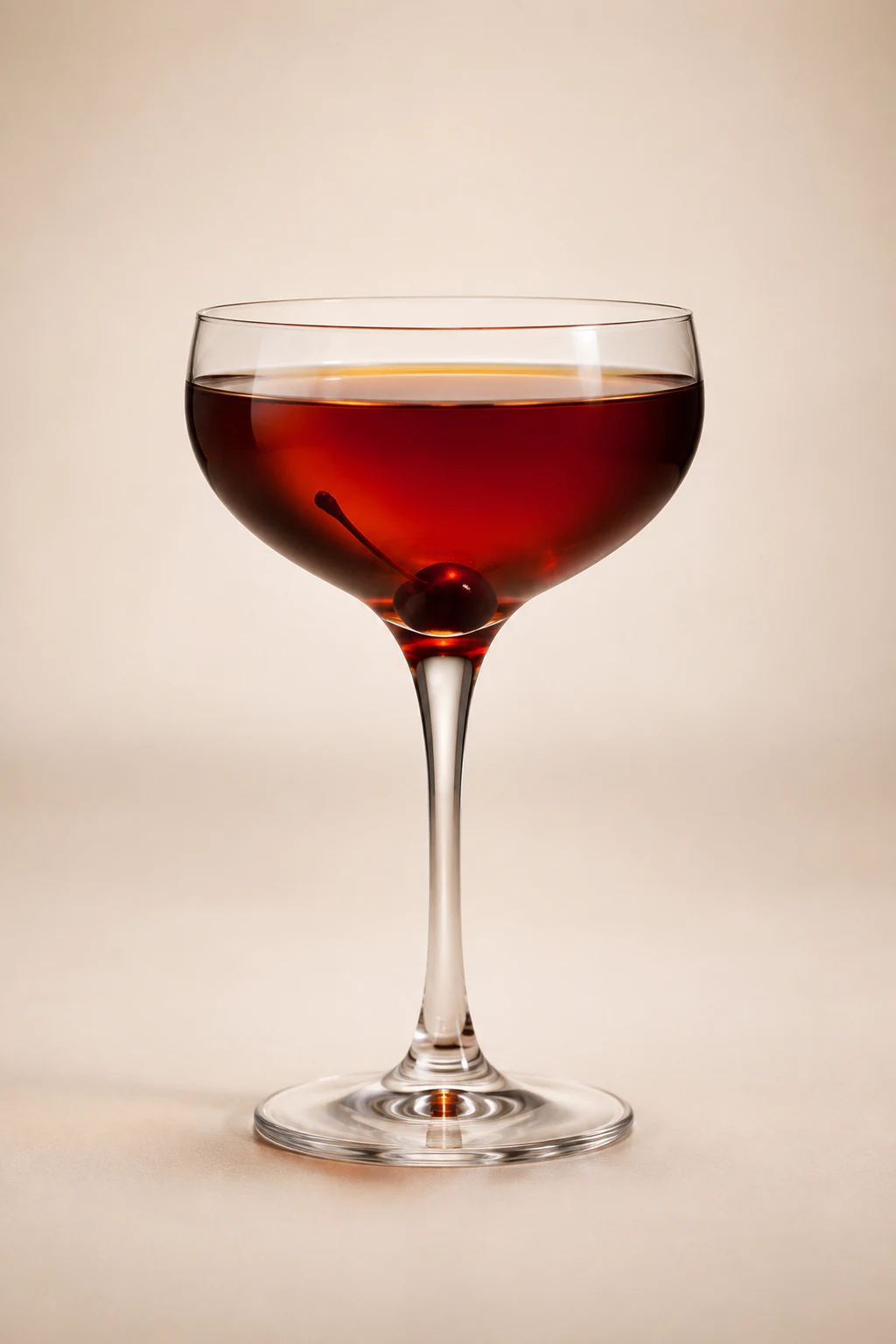 ManhattanRye stirred with sweet vermouth and a dash of Angostura, cherry in the bottom. Warm, smooth, and unchanged since the 1880s.
10All 17 spirit-forward classics
BoulevardierWhiskey · 25.8%Dry MartiniGin · 30%ManhattanWhiskey · 30%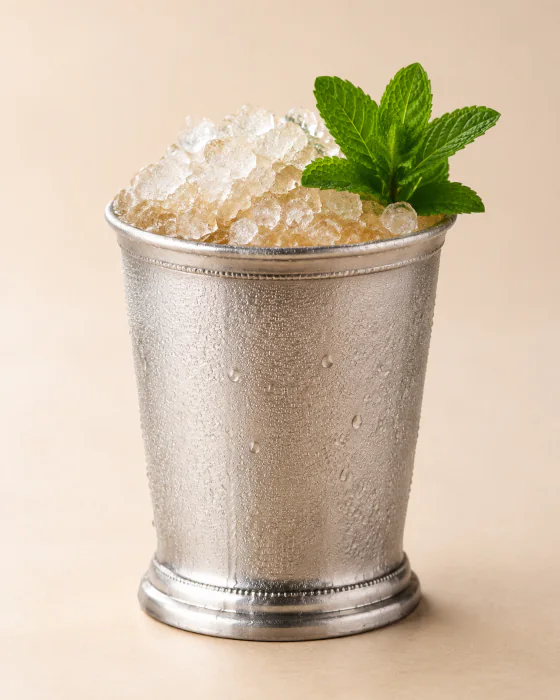 Mint JulepWhiskey · 28%NegroniGin · 24%Old FashionedWhiskey · 29.4%SazeracCognac · 30%VesperGin · 28%CardinaleGin · 22.1%Hanky PankyGin · 22.9%MartinezGin · 21%
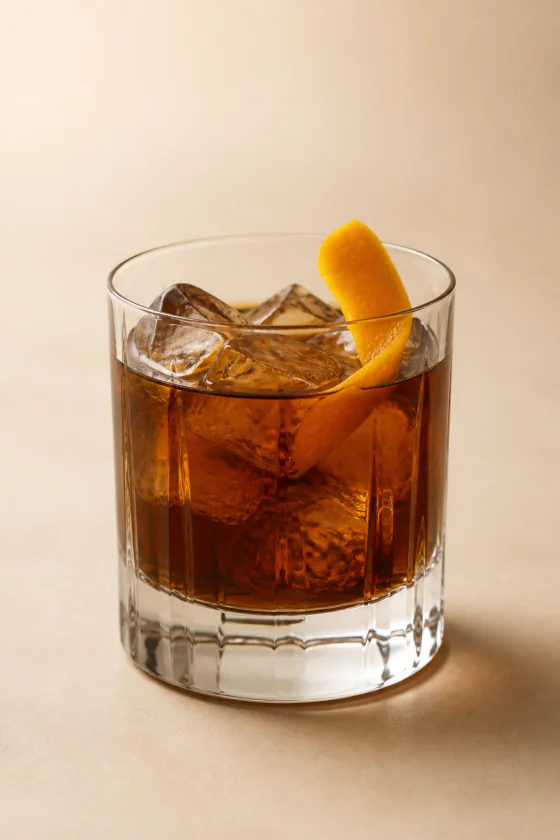 Rabo de GaloCachaça · 22.8%
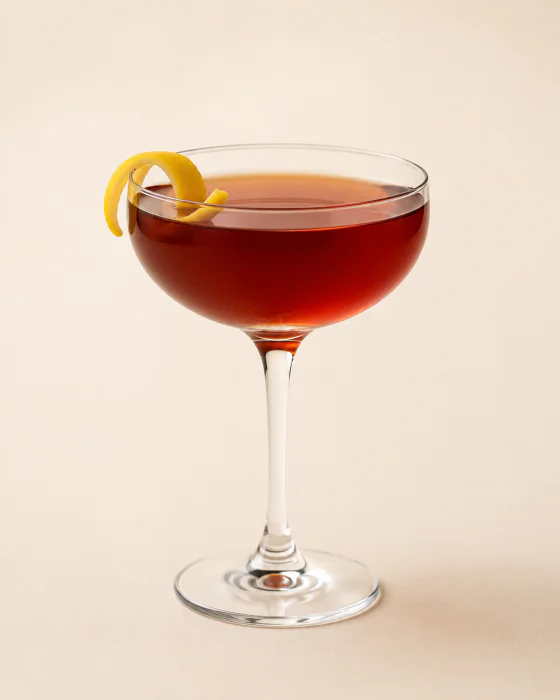 Remember the MaineWhiskey · 50%Rusty NailScotch · 31.5%
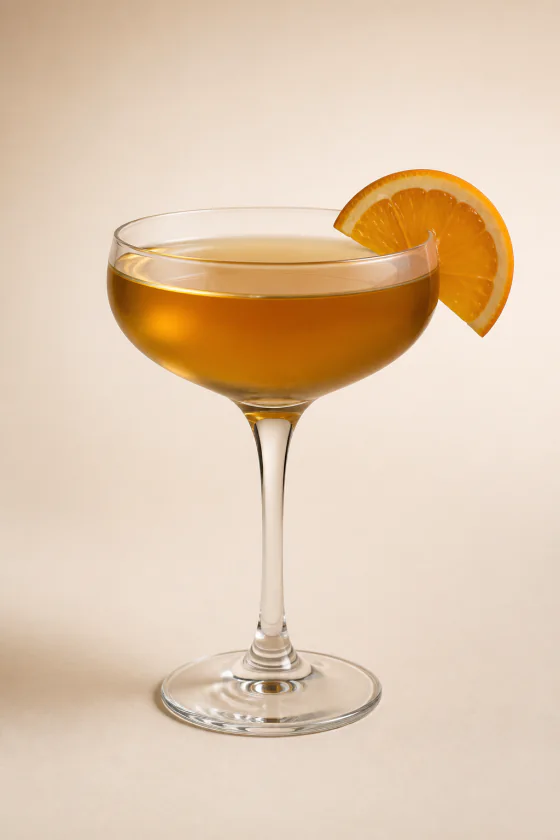 TipperaryWhiskey · 26%
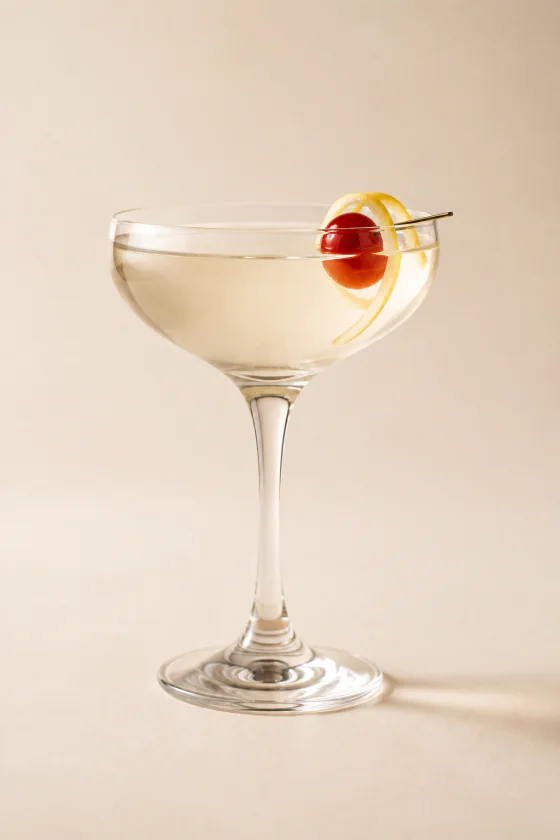 TuxedoGin · 24%Vieux CarréWhiskey · 28%
11Browse them in the library
See every spirit-forward classic as photo cards, next to the other lists in the cocktail library.
Open the Stirred, strong, slow list →Every classic, A to Z →